Why Everyone Should Visit Dearborn, Michigan
Nearly half of Dearborn speaks Arabic at home, and the commercial strips run in it. The question is not who lives there. It is whether the United States intends to keep admitting people at a volume and concentration that reproduces the sending country inside an American city, while asking nothing of anyone who arrives.

Key Findings
Dearborn had 109,976 residents in the 2020 Census, and 54.5% of them reported Middle Eastern or North African ancestry. Dearborn is now the first Arab-majority city in the United States.
Approximately 46% of Dearborn residents over the age of five speak Arabic as their primary language at home, and ~29% of the population is foreign-born.
Dearborn is the hometown of Henry Ford and the headquarters of Ford Motor Company. It's a cradle of American industry and it is now the most concentrated Arab/Muslim community in the country.
In the 1950s, a Moroccan would walk through the streets of Casablanca or an Algerian through the streets of Oran, and see a plethora of foreigners speaking their native languages and engaging in their own cultural norms. Similarly, an American walks today through the streets of Dearborn or Hamtramck, Michigan and see a completely foreign culture. Just as Casablanca, Marrakech, Oran, Algiers, Tunis, and Tangier felt foreign - with different languages, culture, schools than the rest of their countries - many foreigner-run American cities today are foreign to Americans. The local government, the cafes, the restaurants, and the schools in these cities belong to an immigrant population that share little cultural similarities to the towns and cities around them.
Everyone in the United States should go to Dearborn, or Paterson in New Jersey, or Fremont in California, and see what mass immigration produces when it arrives in large concentrations and is asked to assimilate to nothing. A society organised this way is a normal thing for Syria or Pakistan to be. It is their country and their business. The question here is a different one: whether the United States intends to keep admitting people at a volume and a concentration that reproduces the sending country inside an American city, and whether it intends to keep asking nothing of the people who arrive.
What you see
Drive the length of Warren Avenue or Michigan Avenue and the storefronts are entirely in Arabic. Bakeries, clinics, law offices, and grocery chains carry Arabic-first signage, with English second or completely absent. While English has been the national, de-facto language in the country (78.3% of the population aged five and over speaks only English at home), Nearly half of Dearborn residents speaks Arabic at home.
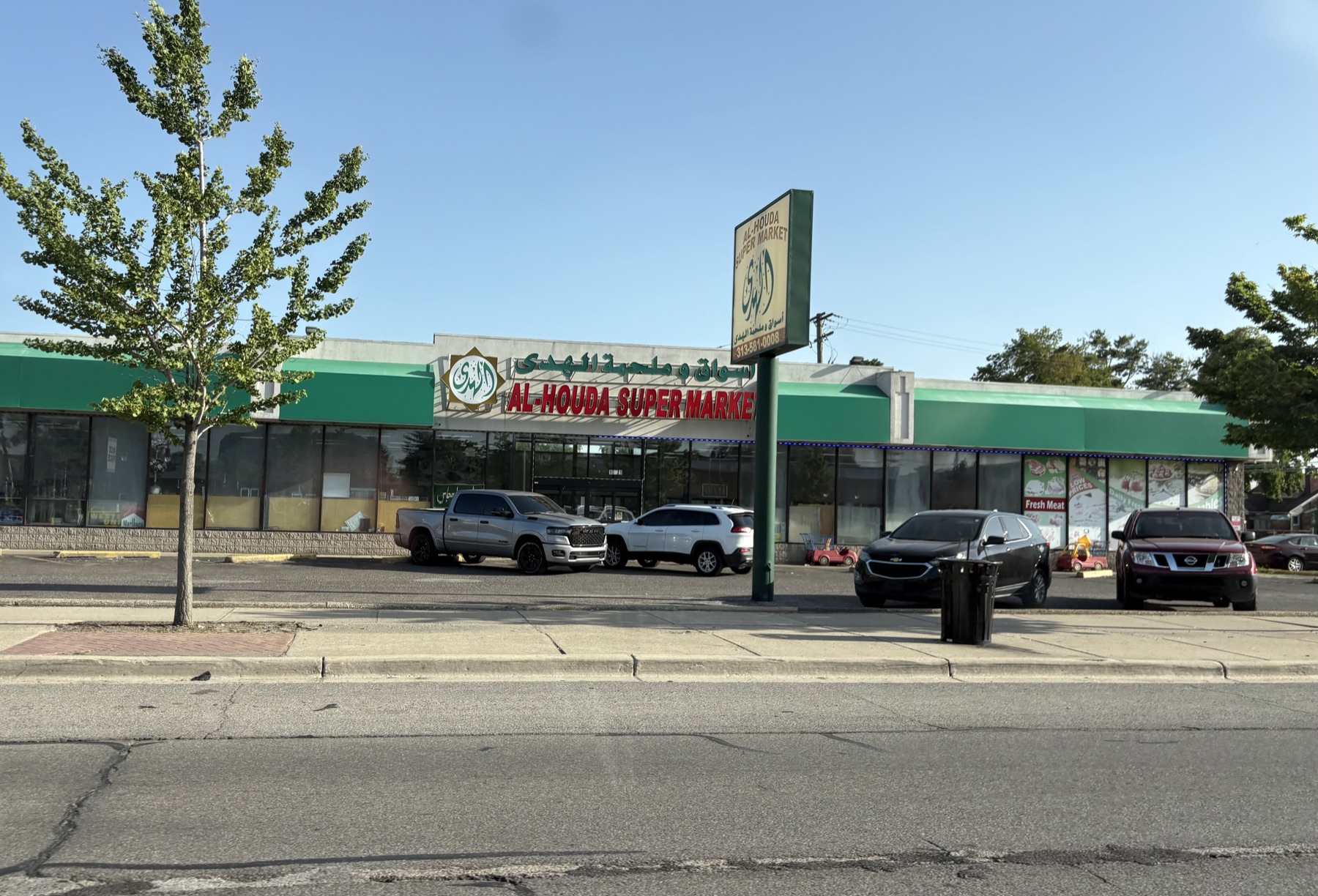
Al-Houda Super Market. The Arabic name runs above the English one, which is the usual order along these blocks.
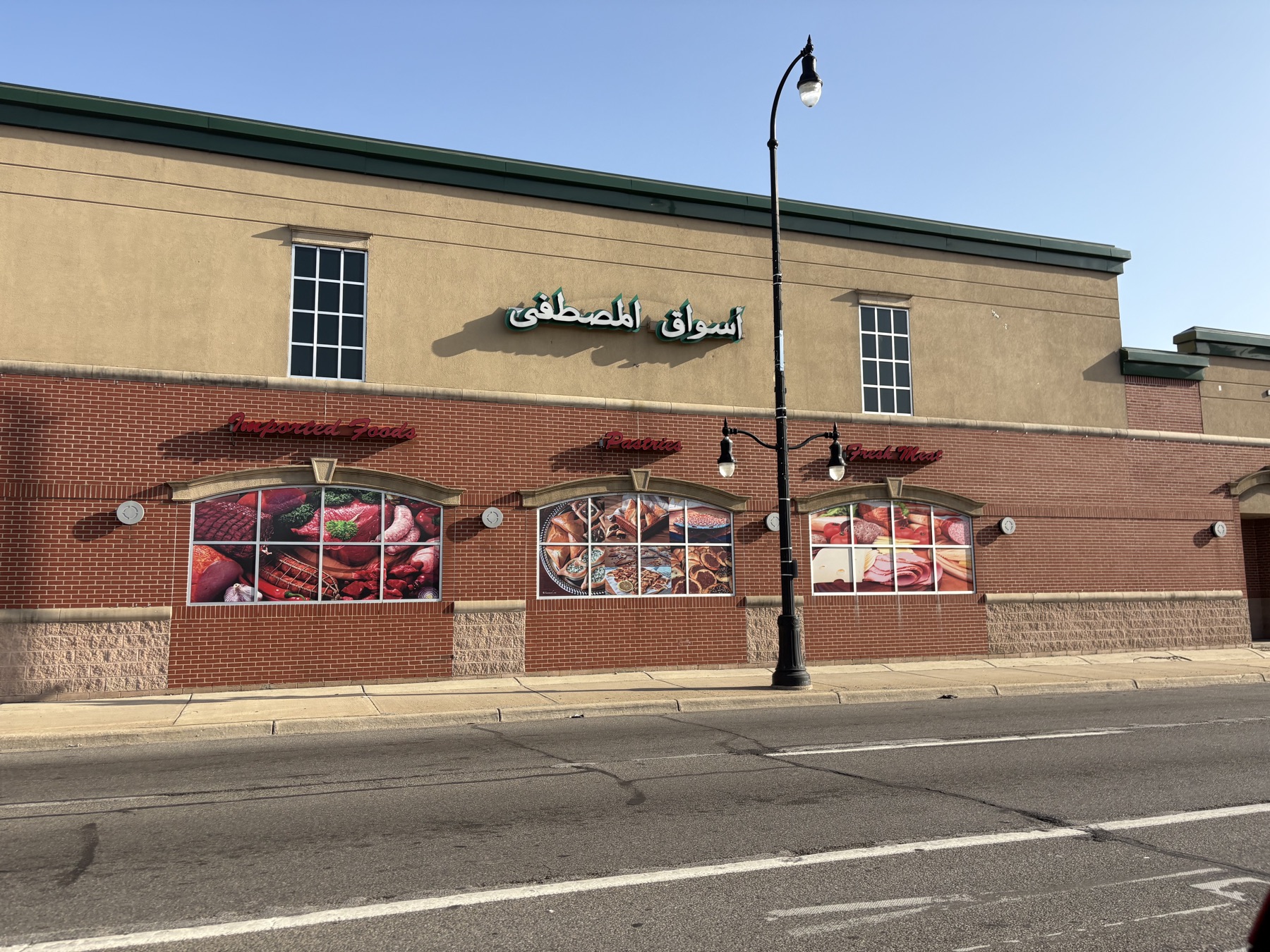
Al-Mustafa markets. The name on the building is in Arabic only; the English appears further down, and only to label departments.
Additionally, we see the lack of integration in regards to the institutions - namely the mosques and cultural institutes. The Islamic Center of America on Ford Road is the largest mosque in North America. A few miles away, in the Southend, the American Moslem Society has stood since 1937; in the early 1980s it won a court fight to broadcast the call to prayer over outdoor loudspeakers, reportedly the first mosque in the country to do so. Fordson High School, built by the Ford company in the 1920s, now has a student body that is roughly 95% of Arab descent, with a halal cafeteria and football practices moved to night during Ramadan. As stated above, the question for us Americans is: is this the sort of society that we want to see more or less of in the future?
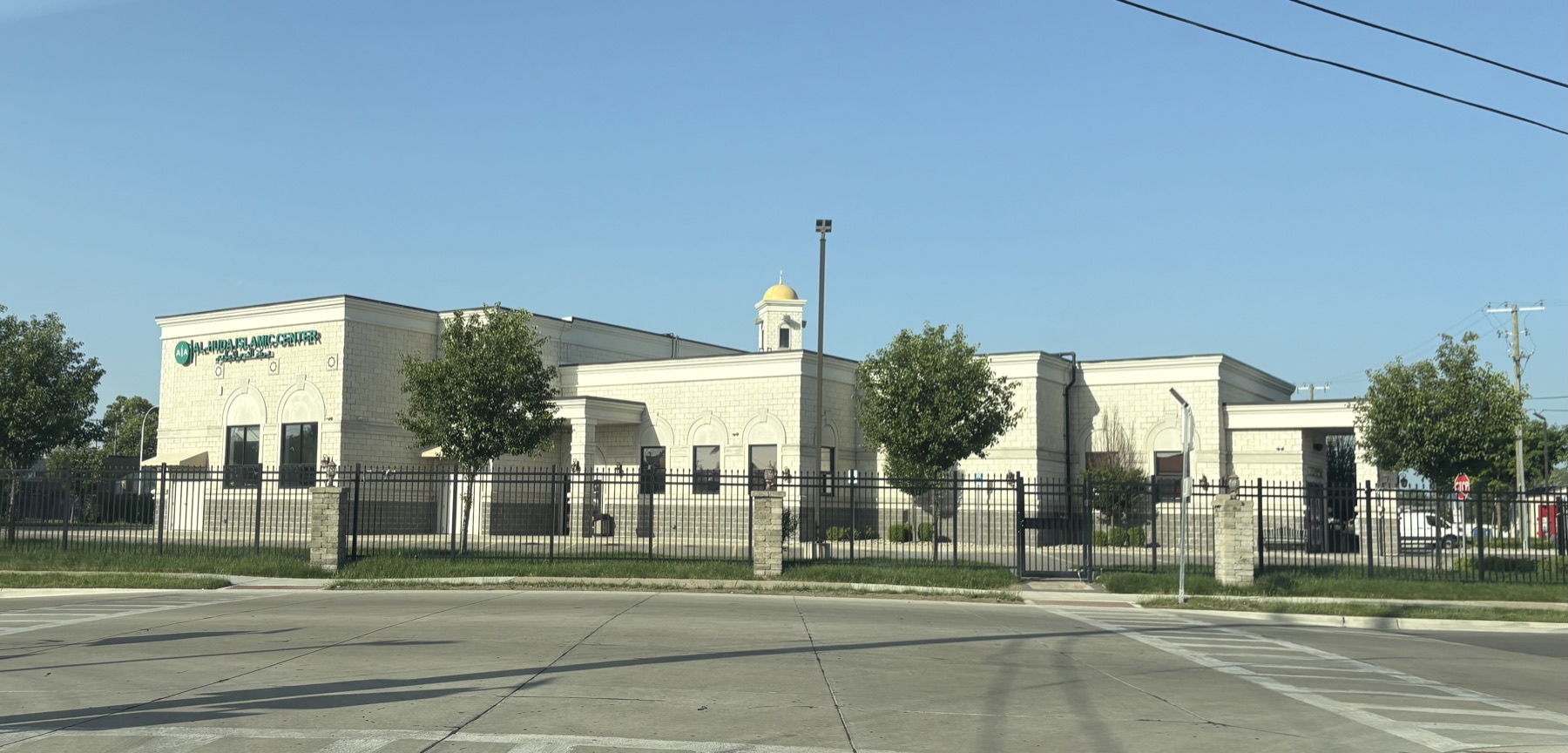
The Al-Huda Islamic Center. Alongside the older congregations, Dearborn has a stock of newer purpose-built centres.
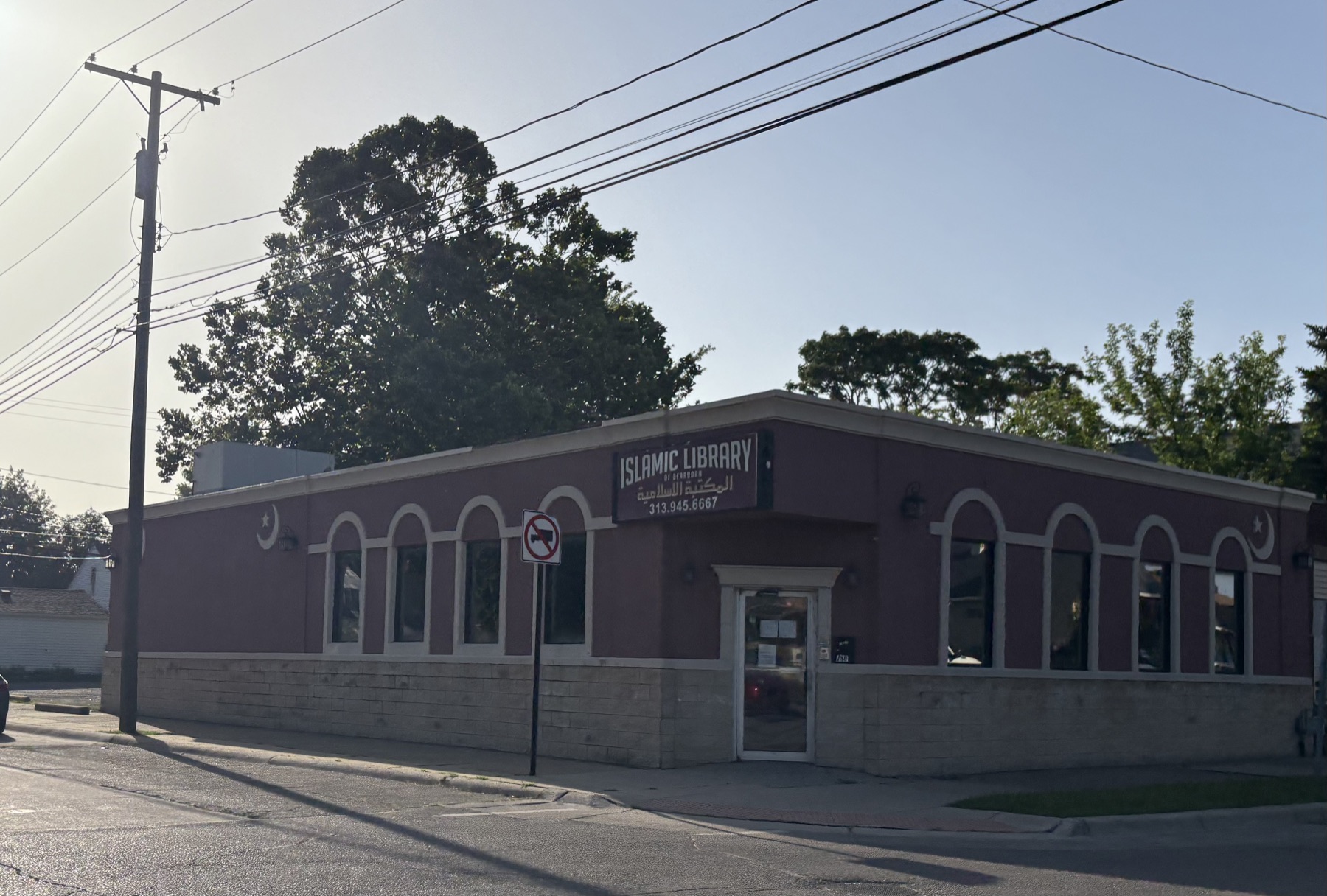
The Islamic Library of Dearborn. The institutions extend past places of worship into libraries, schools and civic bodies.
From a government and political standpoint, the city has elected a government to match. In 2021 Dearborn chose Abdullah Hammoud as its first Arab-American and first Muslim mayor. Down Michigan Avenue sits the Arab American National Museum, the only museum in the United States devoted to Arab-American history and covering Arab Americans of every faith, including the Arab Christians who made up much of the earlier migration to Detroit. None of this is hidden - this sort of heritage and culture is the civic identity of the place.
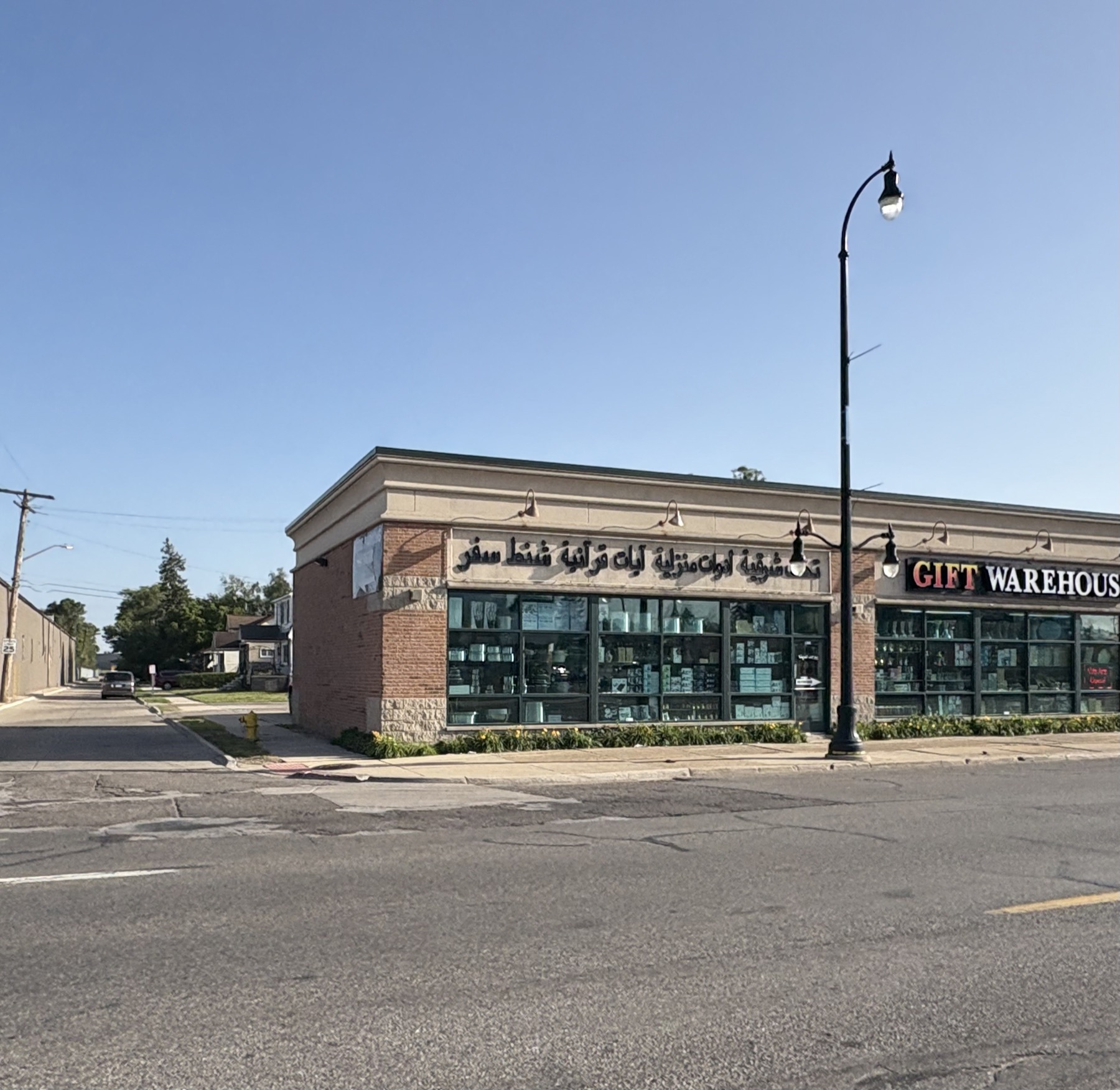
A gift shop on a residential corner. The list of goods along the fascia is Arabic only; the English name sits around the side of the building.
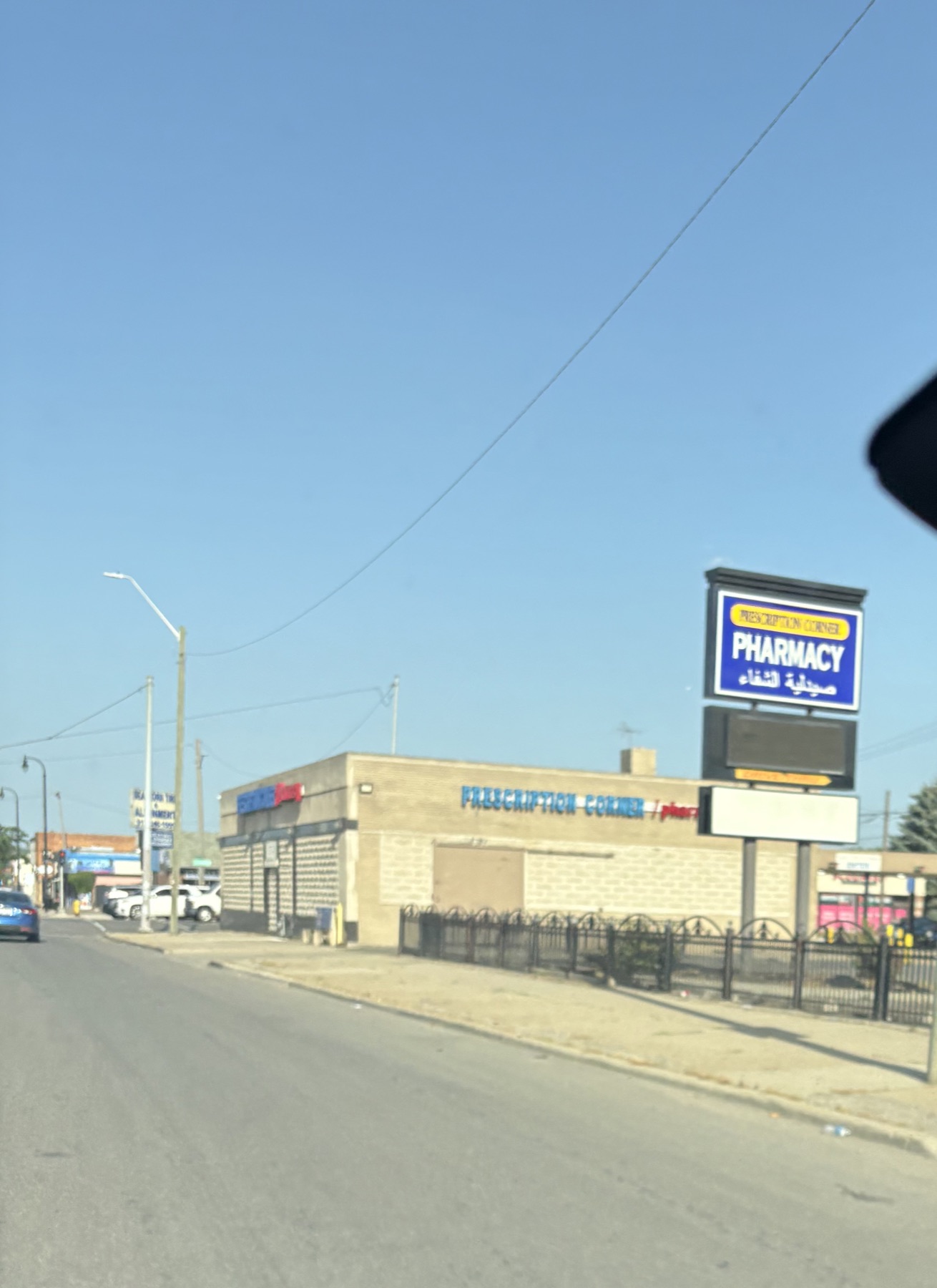
A pharmacy on a commercial strip, signed in both languages. Everyday services - pharmacies, dentists, law offices - carry Arabic alongside or instead of English.
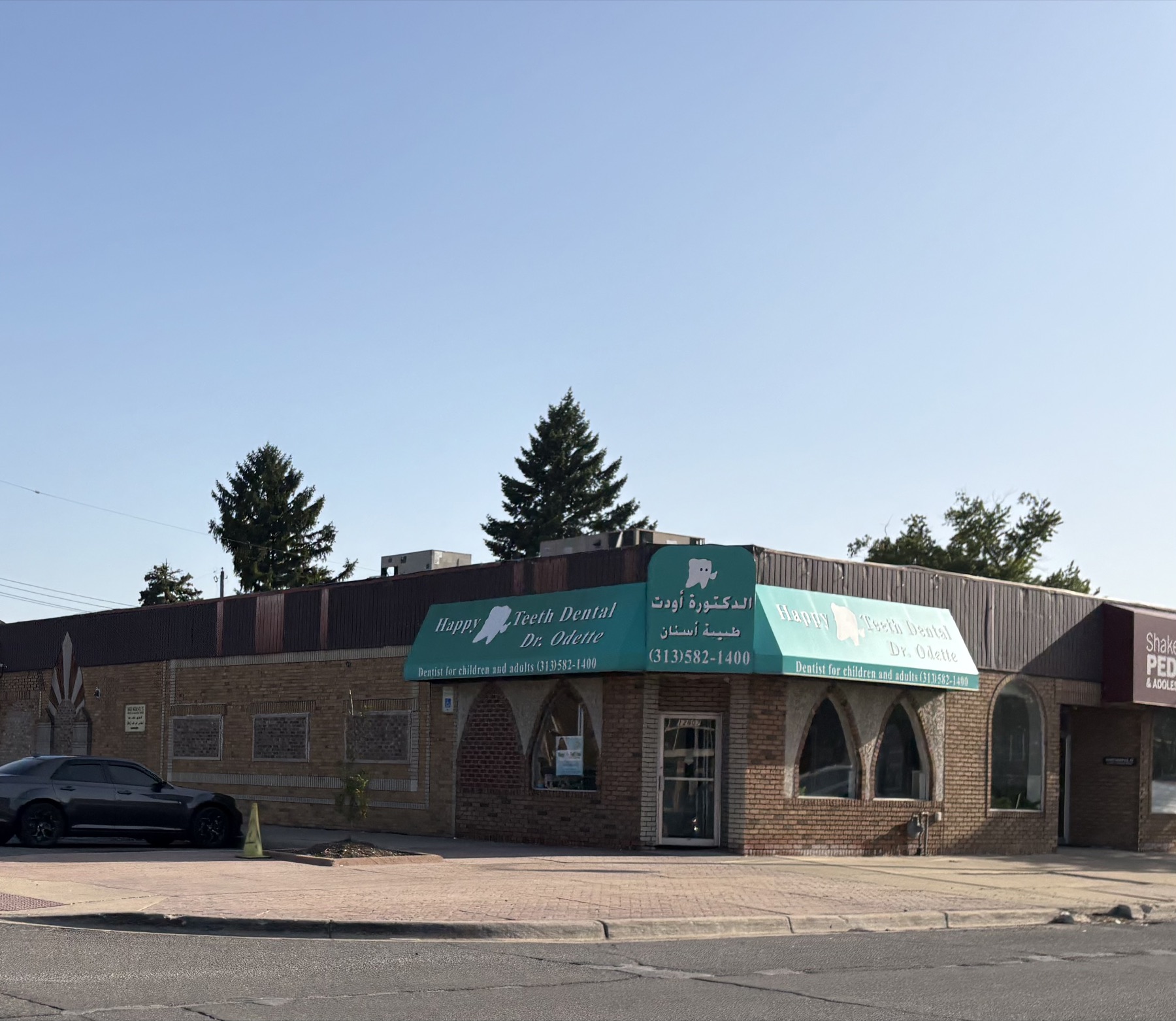
A dental practice signed in both languages, the Arabic giving the same information rather than a decorative flourish.
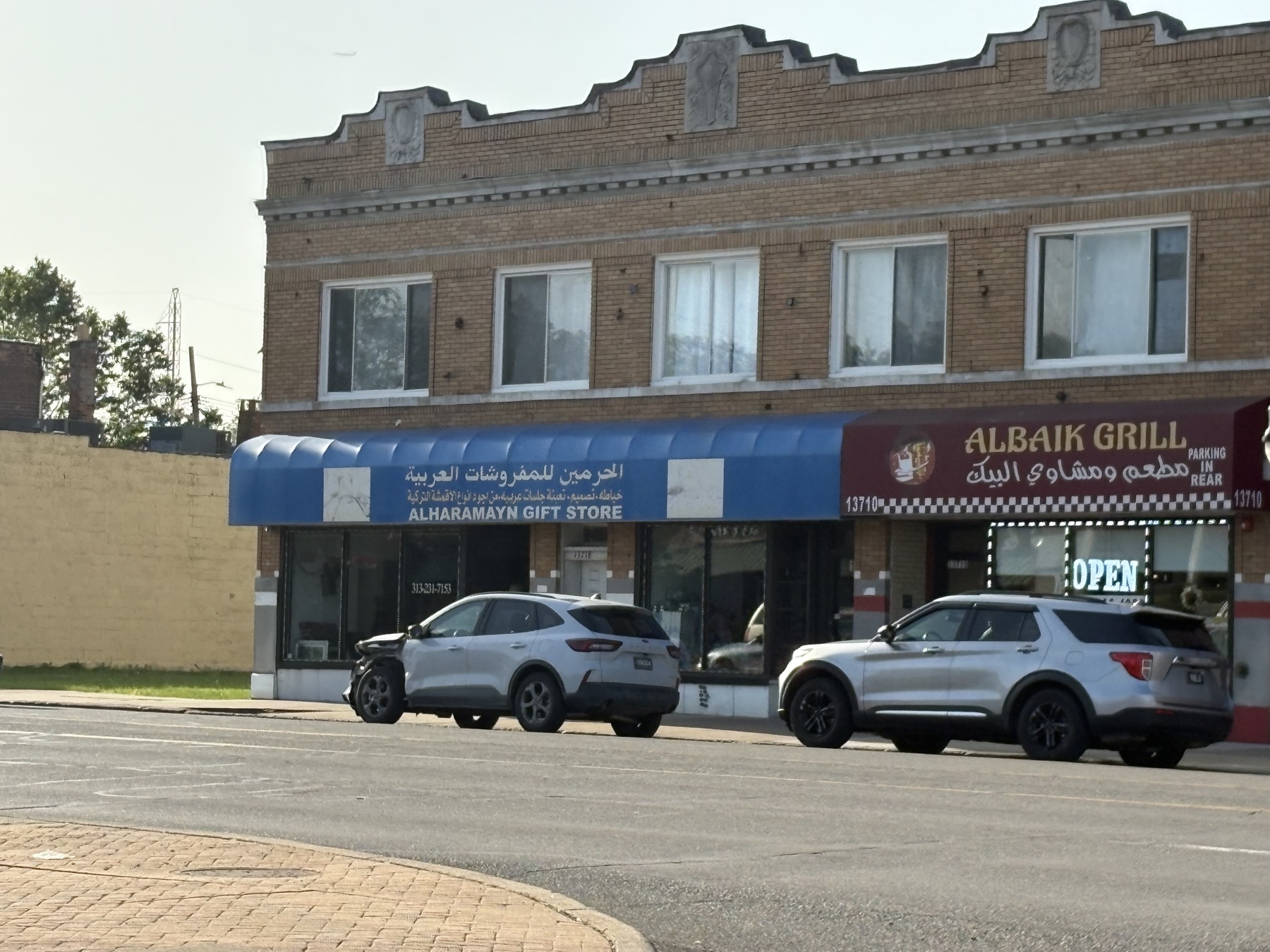
Alharamayn Gift Store and Albaik Grill share a 1920s commercial block.
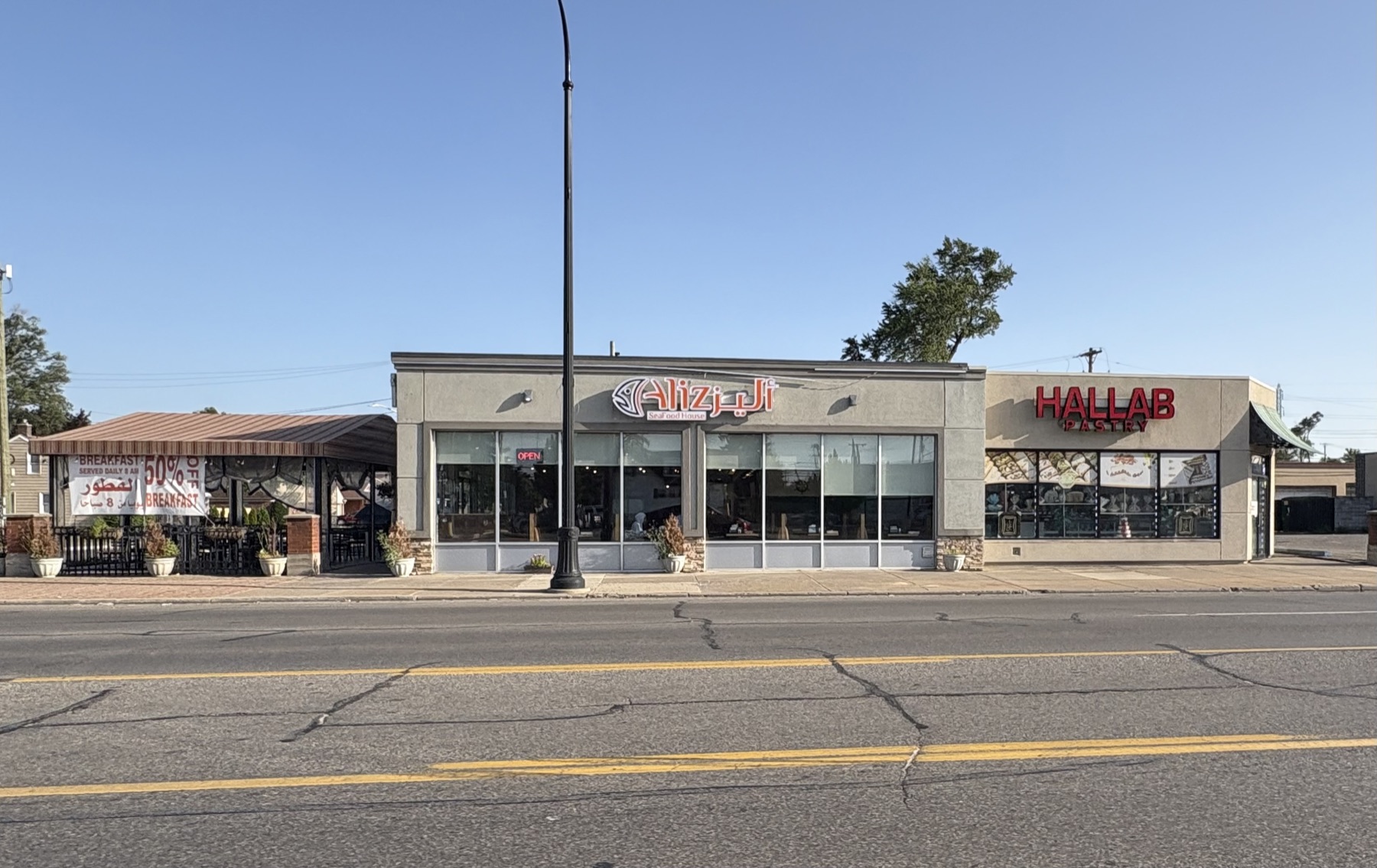
Alizz Seafood House and Hallab Pastry. Hallab is a Tripoli, Lebanon pastry house with a Dearborn branch.
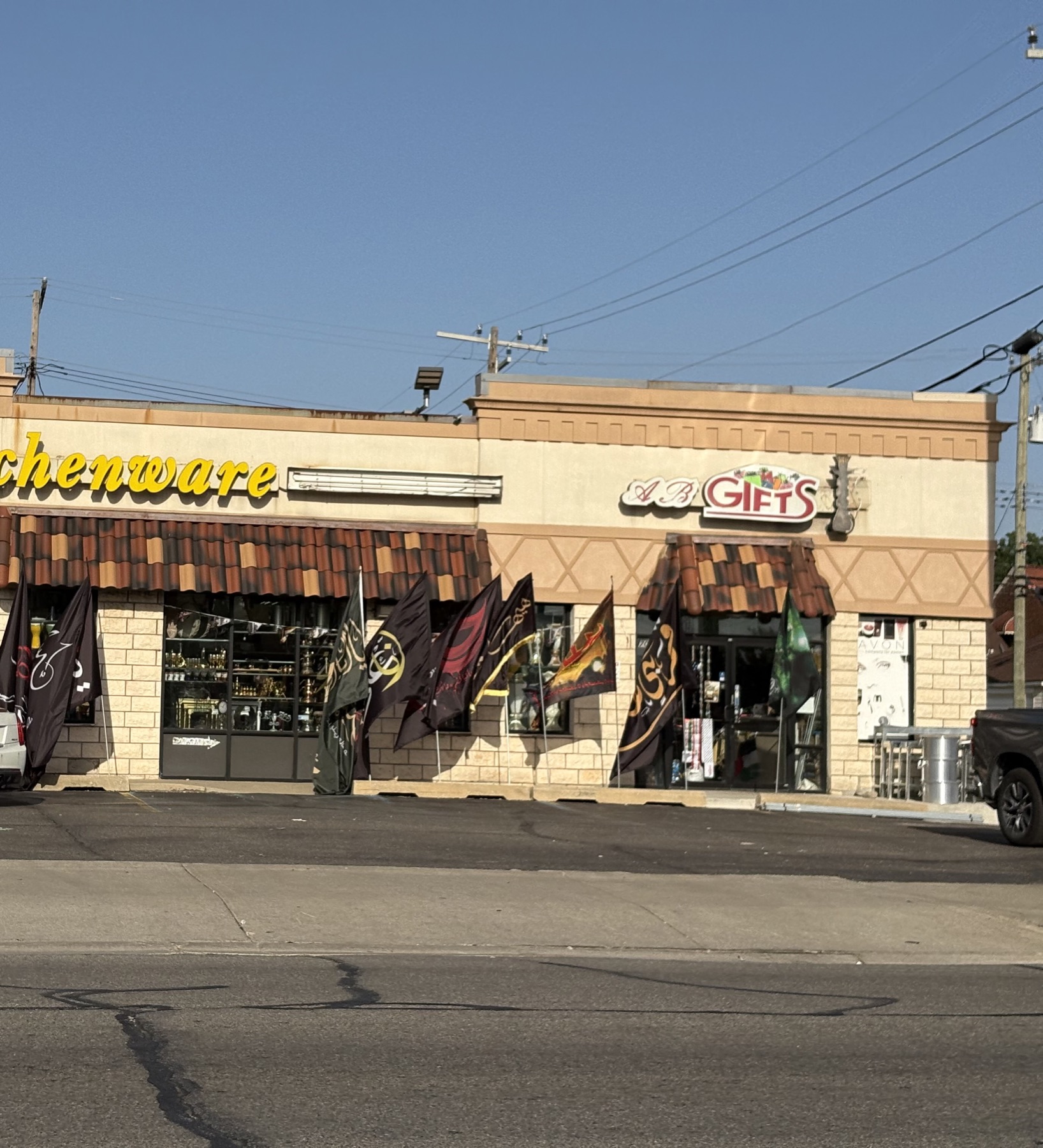
A kitchenware and gift shop with banners in Arabic calligraphy set out along the frontage.
Henry Ford's town
Dearborn is where Ford Motor Company keeps its world headquarters and where Ford built Greenfield Village, an 80-acre shrine to American invention that he stocked with Thomas Edison's laboratory and the Wright brothers' shop. The Henry Ford museum next door draws more than a million visitors a year to celebrate the American century.
The same man started the transformation. Ford's five-dollar day, introduced in 1914, was the highest industrial wage in the world, and it pulled the first Lebanese, Syrian, and Yemeni workers to the plants along the Rouge River. The foothold they established in the 1920s became the base that later waves built on. The cradle of American industry manufactured, among other things, the first Arab-majority city in America.
How it happened
The numbers describe a replacement, not a mixture. The 54.5% Arab share recorded in 2020 is the official figure, and it is widely regarded as an undercount; the director of the Arab American National Museum's narrative center estimated the true share nearer 70%, based on school enrollment. Either way, the foundational population of Dearborn is now the minority in its own city.
The change came in waves, each one deepening the concentration rather than dissolving it. Palestinians arrived after the 1967 war. The Lebanese civil war of 1975 brought Shia Muslims from the south of Lebanon, sometimes entire villages resettling together in Dearborn. Yemenis came through the following decades. Iraqis arrived as refugees after the Gulf War and again after the 2003 invasion. Chain migration did the rest, each admitted family sponsoring the next. A community that could have dispersed and integrated instead grew denser, because arrivals settled where the language, the mosques, and the relatives already were.
The Nation of Settlers has documented this pattern across the demographic record. Volume and concentration remake a place. Assimilation does not fail because the people are incapable of it. It fails because a community large enough to supply its own schools, stores, media, and politics in its own language never has to attempt it.
The rest of the country, slower
The Muslims who settled in Dearborn and in other communities around the country were invited in by an immigration system that asked for zero integration and assimilation. The failure is both on the immigrants coming in and the immigration policy itself, which allowed a combination of mass immigration and the influx of foreigners with zero similarities to the people already living here.
Morocco and Algeria objected to a European population that settled among them and never merged, and they were entitled to. That right is not a European or an American possession. It belongs to every country, including this one, and it is the same right being exercised when the United States sets the terms on which people join it. Dearborn is one example of many. Admit a million people a year, let them settle where their countrymen already are, and require nothing, and there will be more of them.
Our policy answer to this issue: cut admissions by at least 80%, disperse whatever resettlement continues instead of concentrating it in the same few cities, require advanced English for citizenship, and treat assimilation as a condition of entry rather than a hope held afterwards.
Sources
- ClickOnDetroit / WDIV, "Census data shows Arab American population in Dearborn now makes up majority" (26 September 2023) - 2020 Census population of 109,976; 54.5% Middle Eastern or North African ancestry; first Arab-majority city; the ~70% school-enrollment estimate
- US Census Bureau, American Community Survey 2019–2023 5-Year Estimates, Dearborn city, Michigan - 46.1% speak Arabic at home (age 5+); 29.4% foreign-born
- The Henry Ford; dBusiness, "Ford unveils new world headquarters in Dearborn" - Ford Motor Company headquarters, the Henry Ford museum, and Greenfield Village in Dearborn
- WDET / Michigan Public, "Trump wins Dearborn; Jill Stein wins 18 percent of the vote over Gaza" (6 November 2024) - unofficial 2024 city results: Trump ~42%, Harris ~36%, Stein ~18%
- Detroit Historical Society, "Islamic Center of America"; Detroit Historical Society, "American Moslem Society (Masjid Dearborn)" - largest mosque in North America; the 1937 Southend mosque and the loudspeaker call to prayer
- The Detroit News, "Fordson High School marks 100 years" (13 May 2022) - Fordson High School's roughly 95% Arab-ancestry enrollment
- Michigan Public / NPR, "Abdullah Hammoud voted first Arab American and Muslim mayor of Dearborn" - Hammoud elected November 2021, took office January 2022
- Arab American National Museum - the first and only museum in the United States devoted to Arab-American history, on Michigan Avenue in Dearborn
- The Conversation, "A brief history of Dearborn, Michigan - the first Arab American majority city in the US" - Ford's five-dollar day and the early Lebanese, Syrian, and Yemeni settlement; the post-1965 Palestinian, Lebanese, Yemeni, and Iraqi waves
- CNN, "Hamtramck bans Pride flags on public property" (2023) - Hamtramck's all-Muslim mayor and council; the 2023 vote to ban Pride flags from city property
- US Census Bureau, "Most Americans Speak Only English at Home or Speak English Very Well" (American Community Survey 2018-2022 5-Year Estimates) - 78.3% of the population aged five and over speaks only English at home