Nation of Settlers
On this page
  1. Religion
  2. Race and ethnicity
  3. Culture
  4. Case Studies
  5. What we ask

The Three Pillars of Immigration

Immigration must respect a nation's cultural, religious, and racial demographics. Our immigration policy once protected all three. Since 1965 - and even more so since 1991 - the American government has stopped protecting them.

  1. 1.Religion

    Shared belief and traditions.

  2. 2.Race and ethnicity

    The nation's foundational demographics.

  3. 3.Culture

    Language, traditions, and civic habits.

A sovereign nation and its people have a choice in terms of who comes in to their country. It can bring in a small or large number of immigrants. Likewise, it can bring in immigrants who are similar to those already in the country, or it can bring in people who are different. The approach in the United States over the past few decades is to bring in a large number of immigrants who are very different. For most of our history, immigrants were brought in to assimilate and contribute to American society. The country's founders were European, so thus most immigrants were European. The country's founders were Christian, so thus most immigrants were Christian. Immigrants were expected to contribute, not be on welfare, embody the American dream, adopt American customs, speak English, and raise their children as Americans.

There have certainly been serious strains along the way. Allowing millions of Italians, Eastern European, and Jewish immigrants to crowd a handful of cities (leading to tenements, low wages, and poor conditions) was not a sustainable approach - the 1924 Immigration Act sharply restricted new arrivals, and many earlier immigrants and their descendants assimilated over subsequent generations.

We are in a similar but more dire situation today. We have had decades of mass immigration with little assimilation. We have allowed millions of people in without making assimilation a clear priority of immigration policy. In order to have sustainable immigration, we need to abide by three principles:
I.

Religion

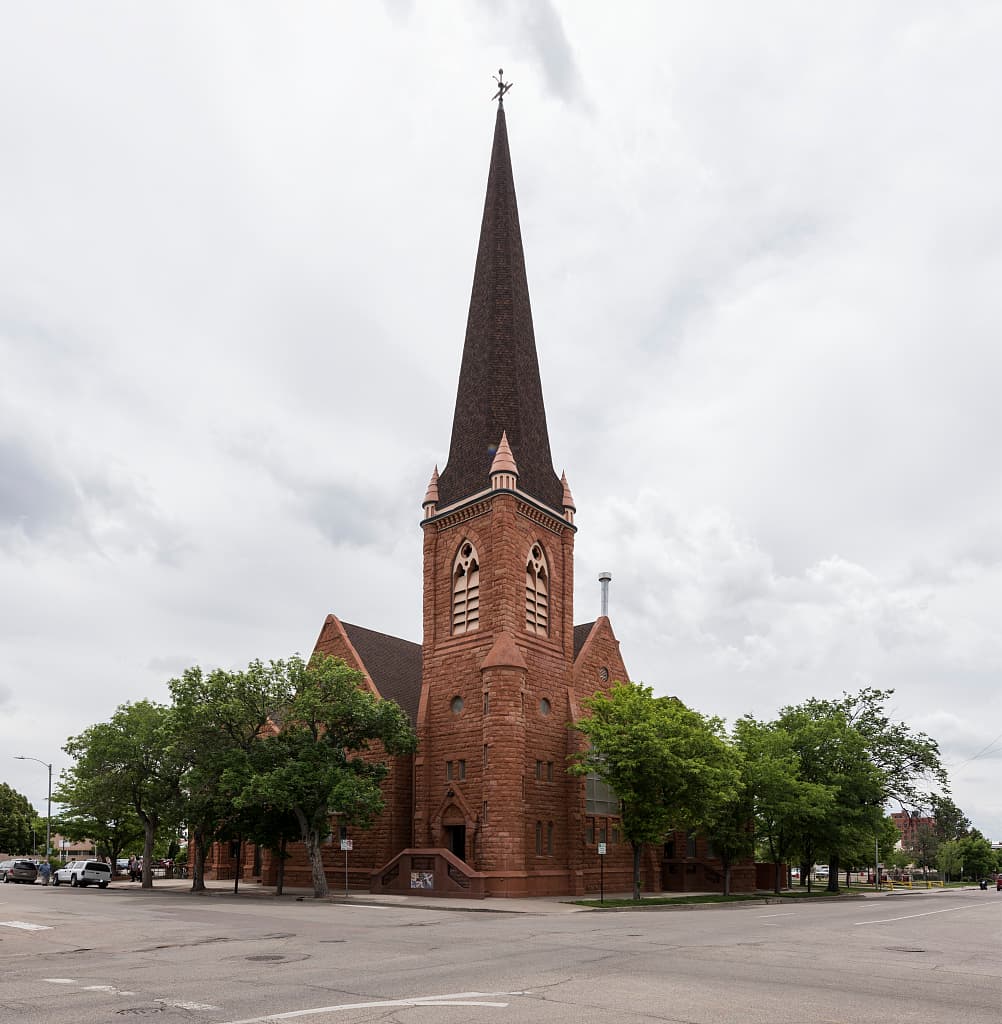
The full First Presbyterian Church building in Pueblo, Colorado.
First Presbyterian Church, Pueblo, Colorado · Carol M. Highsmith · Library of Congress ↗

Every nation is founded with a religion as its backbone.

Religion shapes how a country behaves - it represents a shared belief, shared texts, and traditions. It binds a people together, with the understanding that their faith in God and Scripture is shared believes about marriage, family, law, conscience, and what one person owes another. As Christians in America, we believe in Jesus Christ, in the Holy Trinity, and in the Old and New Testaments. While there is some variation between different denominations, the vast majority is in agreement on these core beliefs.

International Comparison

The principle belongs to every people: Algeria may remain Muslim, Japan may remain Shinto and Buddhist, and America may preserve its Christian inheritance.

Algeria had the right to end French rule and recover an Arab-Berber Muslim nation, even though the departing population was Christian and had brought some valuable institutions with it. The same right belongs to every historic people.

The United States has been shaped by Christianity since its beginning as a nation, specifically Protestantism from Western and Northern European settlers. We have had significant Catholic immigration as well, which believes in the same core beliefs. That Christian heritage is the religious heritage of the United States. We can have religious minorities (e.g. Jews who have been in the country for 100+ years or American Indian tribal religions that predate European settlement) but the overall foundational religion is Protestant Christianity.

The questions then for Pillar #1 are:

  • Is immigration changing the country's religious demographics?
  • Is the United States becoming a less Protestant Christian nation due to immigration?
  • Are specific groups of immigrants worse for America as a Christian nation?
  • Do immigrants respect the existing religion in the country they are moving to?

Christianity does not spread by conquest, permanent foreign rule, or forced conversion. Christ commanded Christians to carry the gospel to every nation through teaching and baptism. That mission asks people to believe; it does not give one nation the right to dissolve another. National continuity and voluntary conversion are not opposing ideas.

America's inherited framework is Christian, Protestant and Catholic. Mass immigration from outside that framework brings faiths with different relationships to law, family, and the state. Without assimilation, those differences can harden into parallel institutions.

II.

Race and ethnicity

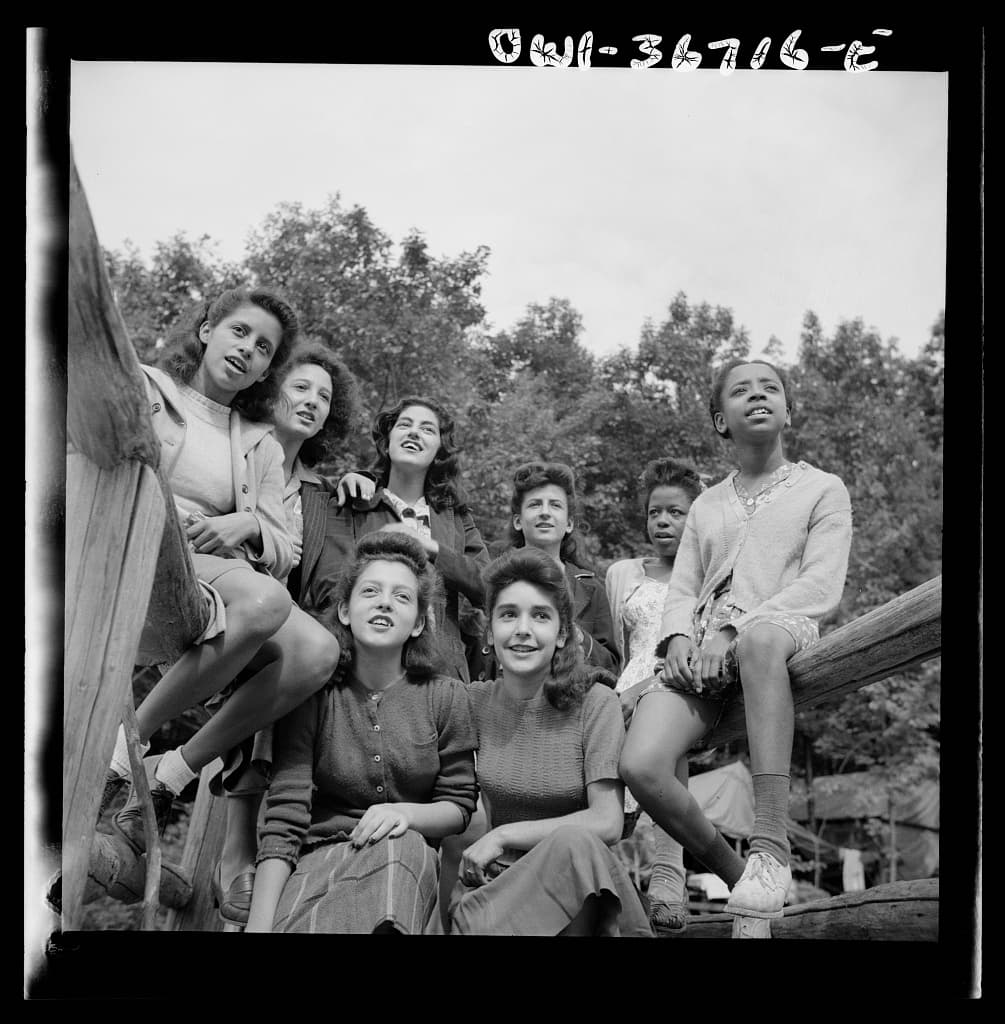
Campers together at an interracial camp in Arden, New York, in 1943.
Camp Gaylord White, Arden, New York, 1943 · Gordon Parks · Library of Congress ↗

Likewise, immigration policy has to respect a country's racial and ethnic demographics.

The United States is a historically white and caucasian country, with a minority Black, African-origin population. The initial demographics of the country was approximately 80% White European, 20% Black African.

International Comparison

Decolonization in the 1950's and 1960's allowed many countries in Africa and the Middle East to govern themselves. The likes of Algeria, Morocco, and Libya chose to expel the Europeans immigrants and preserve their own culture.

The same principle applies to the United States. Its European-descended, Black, Indigenous, and long-established Hispanic communities have distinct histories. An immigration policy can admit people from elsewhere without disregarding the demographic composition of those communities.

III.

Culture

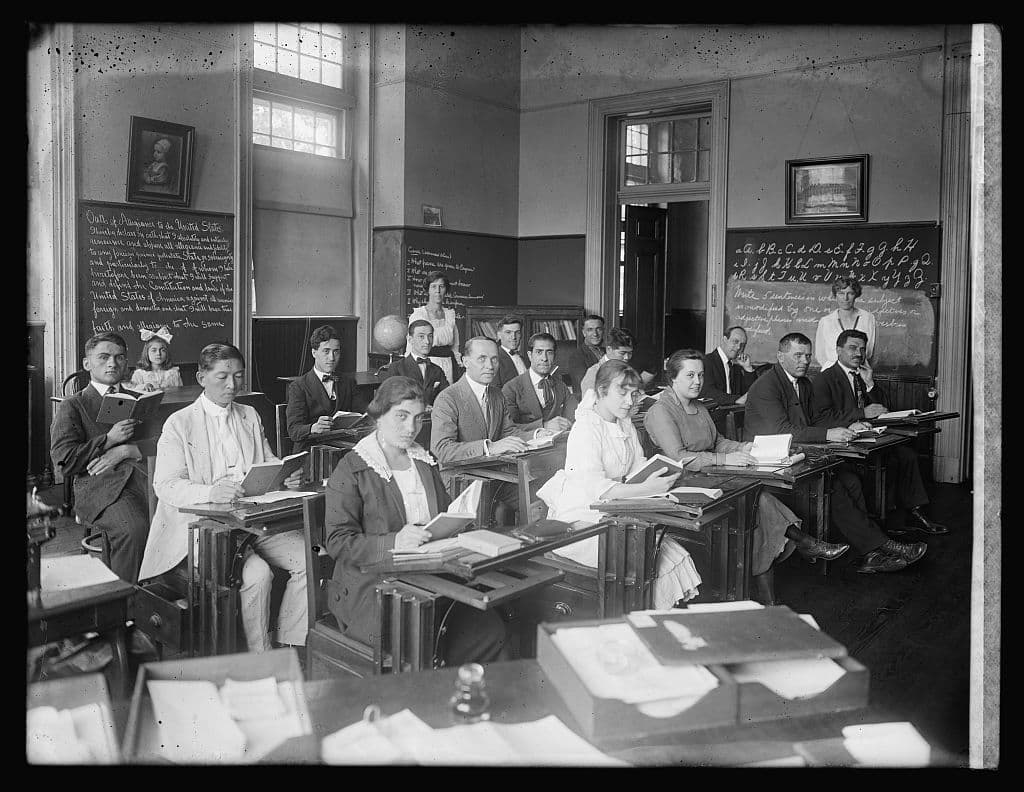
Adults attending an Americanization class around 1920.
Americanization class, c. 1920 · National Photo Company · Library of Congress ↗

Culture is the most difficult to define exactly. It is intertwined with religion but also includes language, shared traditions and holidays, and civic habits.

England shares our language, and Germany and Norway have Protestant histories. Yet the United States has its own civic habits and public calendar: Thanksgiving and the Fourth of July; the Bill of Rights; a tradition of self-government and national self-determination; respect for military service; and a longstanding civilian gun-owning tradition. These are not practices every American follows, but they are recognizable parts of the country newcomers join. They can change over time, but immigration should not be used to change them without the consent of the people already living here.

International Comparison

Greece marks Orthodox Easter and its own independence day. In China, Spring Festival anchors a different calendar of family traditions. Those customs are not interchangeable with American holidays simply because all three countries value family, faith, or national history.

Assimilation is the machine that turns foreigners into Americans. It ran for the Irish, the Italians, the Poles, and the Jews of the first wave, and it ran across color lines, for Americans black, Hispanic, and Caucasian alike. A single generation was usually enough. The children spoke English, took the civic oath as their own, and stopped being hyphenated.

That machine needs pressure and time to work, and it needs numbers it can absorb. When people arrive in enormous concentrations, keep their own language, and face no expectation to integrate, the result is not a slower melting pot. It is a set of separate societies inside the same borders, operating by different rules. Public institutions then begin to rearrange themselves around the arrivals rather than the other way around.

Case Studies

View twelve case study candidates

These cases compare the cited measures of language, education, work, and civic life across different populations and time periods. Religion and ethnicity describe each case; neither is an individual outcome measure.[1]

“Large-scale” here means at least one million first-generation residents or arrivals nationally, or at least 500,000 arrivals in a single year. The table states whether its figure is a resident stock or an arrival flow; those measures should not be compared as if they were the same. Minnesota’s Somali case is a concentrated local cohort, not a national million-person movement. Scale alone does not determine whether assimilation works.

Italians in the US, 1880–1920 and later generations

Mass-scale: Yes · more than 4 million arrivals by 1920

Religion
  • Muslim majority: No.
  • Christian majority: Yes.
  • Mostly Catholic; parish networks mattered in early settlement.
Race and ethnicity
  • European origin: Yes.
  • Italian communities were initially concentrated in several US cities.
Culture and outcomes
  • US schools taught English and civic customs.
  • Later generations entered unions, public life, and military service.
  • Early church effects differed across language, marriage, and naturalization.

Sources: [2][3][16]

Vietnamese Americans, 1975 onward

Mass-scale: Yes · 1.29 million immigrant residents in 2023

Religion
  • Muslim majority: No.
  • Christian majority: No.
  • Pew finds 37% Buddhist, 36% Christian, and 23% unaffiliated adults.
Race and ethnicity
  • European origin: No.
  • Vietnamese origin; a different migration history from the earlier European waves.
Culture and outcomes
  • Among US-born Vietnamese, 90% of those age 5+ are English proficient; 59% of adults age 25+ have a bachelor’s degree, versus 29% of immigrant adults.

Sources: [17][18]

Mexican Americans, recent decades

Mass-scale: Yes · about 12 million Mexican-born US residents in 2010

Religion
  • Muslim majority: No.
  • Christian majority: Yes.
  • In a Pew survey, 61% identified as Catholic and 18% as Protestant.
Race and ethnicity
  • European origin: No single category.
  • Mexican origin includes varied ancestry; identity is measured separately from language or work.
Culture and outcomes
  • In Pew’s surveys, 93% of second-generation Latinos spoke English well or very well; 60% of second-generation people of Mexican origin called themselves typical Americans, rising to 71% in the third generation.

Sources: [19][20][21][22]

Somali-background youth in Minnesota

Mass-scale: No · concentrated local cohort of 26,344 students in a 2006–2022 study; 4% of state high-school students in 2022

Religion
  • Muslim majority: Yes in Somalia, where more than 99% are Sunni Muslim.
  • Christian majority: No.
  • The Minnesota student study did not ask religion.
Race and ethnicity
  • European origin: No.
  • The study identifies Black students who reported Somali as a home language; it does not cover every Somali-descended resident.
Culture and outcomes
  • 85% had recorded Minnesota employment versus 80% of the comparison group; 27% earned a postsecondary credential versus 42%.
  • Time to a living wage was nine years versus six.
  • Family income differed sharply.

Sources: [4][24]

Germany’s 2015 refugee arrivals

Mass-scale: Yes · 890,000 newly arrived asylum seekers in 2015

Religion
  • Muslim majority: Yes in the broader 2013–2016 refugee survey: about 71% Muslim and 17% Christian.
  • Christian majority: No.
  • This is not a separate measure of the 2015 cohort.
Race and ethnicity
  • European origin: Mixed.
  • Arrivals came from multiple countries; this is an entry cohort, not a single ethnic group.
Culture and outcomes
  • The 2015 cohort’s employment reached 64% in 2024, near the 70% population rate, while low pay and gender gaps remained.

Sources: [12][13][23][25]

Additional cases for research

The former design preview listed these seven cases with sample scores. No sourced assessment has been completed for them.

  • French settlers in AlgeriaAlgeria · Research pending
  • People of Indian origin in the UKUnited Kingdom · Research pending
  • India-born residents in CanadaCanada · Research pending
  • Hong Kong origin residents in Western CanadaCanada · Research pending
  • Japanese descendants in BrazilBrazil · Research pending
  • South American immigrants in SpainSpain · Research pending
  • Muslims in SpainSpain · Research pending

What we ask

The Nation of Settlers does not ask for anything America has not done before. We ask for a return to the standard the country kept from 1924 to 1965, and threw away in the decades since.

Sharp cuts to the overall numbers, deep enough to let assimilation catch up. A hard end to illegal entry. Selection that favors people who can actually become American, and a real demand that they do: English proficiency, civic knowledge, and a genuine commitment to the country's constitutional order.

Sources

  1. National Academies, The Integration of Immigrants into American Society (2015)
    Source notes

    Reviews language, education, work, social and civic integration across generations; no single measure captures the whole process.

  2. Library of Congress, A Century in the Spotlight: Italian Immigration and Relocation in US History
    Source notes

    Historical account of Italian American participation in schools, unions, public life and military service.

  3. Gagliarducci and Tabellini, Faith and Assimilation: Italian Immigrants in the US (NBER, 2022)
    Source notes

    County-level study of Italian Catholic churches and several distinct assimilation outcomes, 1890–1920.

  4. Minnesota Department of Employment and Economic Development, The Experience of Somali Youth in Minnesota (2026)
    Source notes

    Administrative school and wage records; defines the study group by Black race and Somali home language. The employment rate is for people observed working in Minnesota, and the comparison groups differ greatly in family income.

  5. OECD, Germany: Intergenerational Inequalities for Children of Immigrants from Turkey and the Former Yugoslavia (2018)
    Source notes

    Compares education, employment and social ties among native-born descendants of former guest workers.

  6. Statistics Canada, Intergenerational Education Mobility and Labour Market Outcomes (2019)
    Source notes

    Examines long-term educational and labor-market outcomes of the Canadian-born second generation.

  7. OECD, Skills and Labour Market Integration of Immigrants and their Children in Flanders (2023)
    Source notes

    Reports different employment outcomes by migration category, with duration of residence and other characteristics affecting comparisons.

  8. OECD, Working Together for Local Integration of Migrants and Refugees (2018)
    Source notes

    Places integration in schools, workplaces, neighborhoods and public spaces; it does not prescribe a national admissions cap.

  9. OECD, Residential Segregation of Immigrants: Patterns, Drivers, Effects and Policy Responses (2021)
    Source notes

    Reviews neighborhood concentration and integration, including the difficulty of separating causal effects from residential selection.

  10. Heller and Mumma, Immigrant Integration in the United States: The Role of Adult English Language Training (2023)
    Source notes

    Randomized enrollment lottery in a Massachusetts adult education program; estimated voting and earnings effects apply to participants in that setting.

  11. Arendt and coauthors, Language Training and Refugees' Integration (NBER, 2020–2021)
    Source notes

    Evaluates a Danish reform using a cutoff in eligibility and follows refugees' labor-market outcomes over time.

  12. German Institute for Employment Research, Refugee Migration Ten Years On (2025)
    Source notes

    Follows Germany's 2015 refugee cohort; employment does not capture all dimensions of assimilation.

  13. Albarosa and Elsner, Forced Migration and Social Cohesion: Evidence from Germany's 2015–2016 Inflow (2023)
    Source notes

    Comparison of high- and low-inflow areas found mixed effects on attitudes and a temporary rise in anti-immigrant violence in some areas.

  14. Pew Research Center, 2023–2024 Religious Landscape Study (2025)
    Source notes

    Survey of US adults; religious affiliation differs from an outcome measure of assimilation.

  15. OECD, The Integration of Children of Immigrants in OECD Countries (2025)
    Source notes

    Compares reading outcomes of foreign-born and native-born children of immigrants across destination countries; country differences have multiple possible causes.

  16. Library of Congress, The Great Arrival: Italian Immigration
  17. Pew Research Center, Vietnamese Population in the US, 2000–2023
  18. Pew Research Center, Vietnamese Americans Fact Sheet (2025)
  19. Pew Research Center, Characteristics of Mexican-Born Immigrants (2012)
  20. Pew Research Center, Second-Generation Americans (2013)
  21. Pew Research Center, How Mexicans in the US See Their Identity (2013)
  22. Pew Research Center, Mexican and Mexican-American Religious Affiliation (2014)
  23. German Federal Office for Migration and Refugees, Migration Report 2015
  24. US Department of State, 2023 Report on International Religious Freedom: Somalia
    Source notes

    The reported religious composition is for Somalia, not the Minnesota student cohort.

  25. German Federal Office for Migration and Refugees, Religious Affiliation and Social Integration of Refugees (2020)
    Source notes

    The 2013–2016 refugee survey is broader than the 2015 arrival cohort.